.png)
How Clinics Can Use WhatsApp Usernames for Safer Customer Communication
- ongpohlee99
- 34 minutes ago
- 6 min read
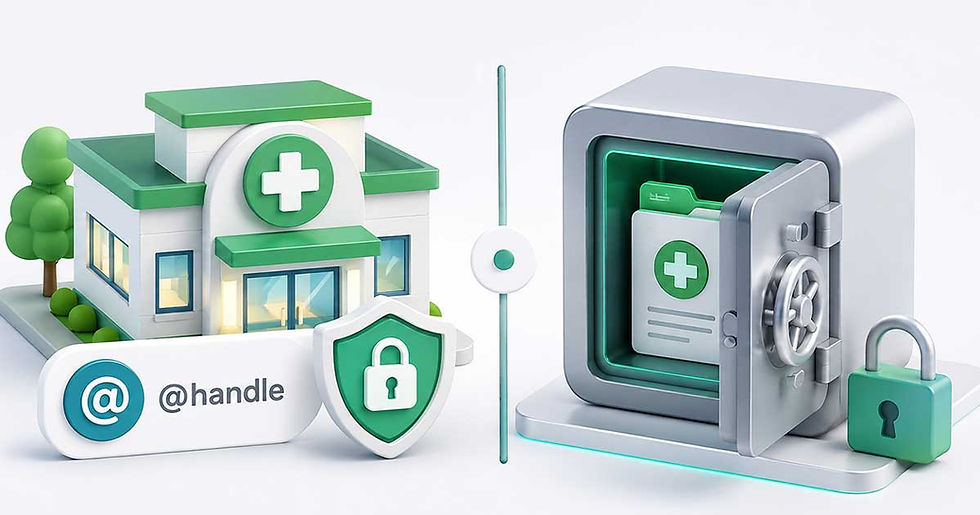
WhatsApp usernames give clinics a genuine privacy upgrade for one specific, valuable thing: how patients and clinics identify and reach each other. For a healthcare setting, where privacy sensitivity is high, that matters. But "safer communication" needs an honest boundary drawn around it, because usernames make contact safer — they do not turn WhatsApp into a secure place for sensitive medical information. Get both halves right, and clinics can use usernames well. Let's walk through what usernames genuinely improve for a clinic, and the critical line they don't cross.
What usernames actually change for a clinic
Ground the feature first. Usernames let people connect without exchanging phone numbers: <cite index="4-1">once enabled, a sender can initiate contact using a unique handle, and the recipient's phone number never becomes visible to the other party.</cite> For a clinic, that reshapes first contact in a few useful ways.
Patients can reach the clinic without exposing their personal number to whoever's on the other end. For privacy-conscious patients — and healthcare is exactly where people are privacy-conscious — that lowers a real barrier to making contact.
The clinic can present a professional handle instead of a staff member's personal number. A clean clinic username is more professional and more private than routing patients to someone's personal mobile, and it keeps work and personal life separated for staff.
So at the identity and first-contact layer, usernames genuinely make clinic communication tidier, more professional, and more privacy-preserving. That's the real benefit — and it's worth claiming clearly. Now the boundary that makes this responsible.
The critical boundary: usernames don't make WhatsApp a medical-records system
Here's the honesty that has to sit at the centre of this, because getting it wrong creates real risk.
Usernames improve who can see your number. They do nothing to change what WhatsApp fundamentally is: a general consumer messaging app, not a compliant clinical-data system. The distinction is well established. <cite index="2-1">The standard consumer WhatsApp application is not inherently compliant with health data regulations; HIPAA-aligned communication requires integrating the WhatsApp Business API through a secure, enterprise-grade platform.</cite>
This isn't theoretical. Regulators have already acted on careless clinical use: <cite index="4-1">the ICO has issued reprimands to organisations that used WhatsApp carelessly, including a healthcare business where staff shared patient data across WhatsApp groups more than 500 times.</cite> And the legal exposure is structural — <cite index="6-1">Meta does not offer data processing agreements covering clinical use of WhatsApp, so the healthcare provider bears full legal responsibility for processing that occurs through the platform.</cite>
So the line is bright and simple: usernames make contact safer; they do not make sensitive health data safe to send over consumer WhatsApp. A username hides a phone number — it doesn't provide the compliant infrastructure, data-processing agreements, or controls that handling patient health information requires. Any clinic using usernames must hold that line firmly, or the privacy "upgrade" becomes a false sense of security over a channel that was never built for clinical data.
Where usernames genuinely help a clinic — and where they don't
With the boundary clear, here's the practical split.
Genuinely safer with usernames: the logistics of contact. A patient messaging to ask about opening hours, to request a callback, to confirm they'll attend, or to be pointed to the right place — all without either side exposing a personal number. Appointment reminders and general, non-sensitive administrative contact become cleaner and more private at the identity level. This is the sweet spot: routine, non-clinical, logistical communication.
Not made safe by usernames: anything involving actual patient health information — symptoms, results, diagnoses, images, records. A username changes who sees a phone number; it does nothing to make the content of a message appropriate for a consumer app. Sensitive health details should not be flowing over standard consumer WhatsApp regardless of usernames, and belong in properly secured, compliant systems built for that purpose.
So the honest guidance to a clinic is: use usernames to make the front door — routine, logistical contact — more private and professional, and keep genuinely sensitive clinical information off consumer WhatsApp entirely, in the compliant systems it requires.
The trust and impersonation angle matters more for clinics
One risk deserves extra weight in a healthcare context, because the stakes are higher.
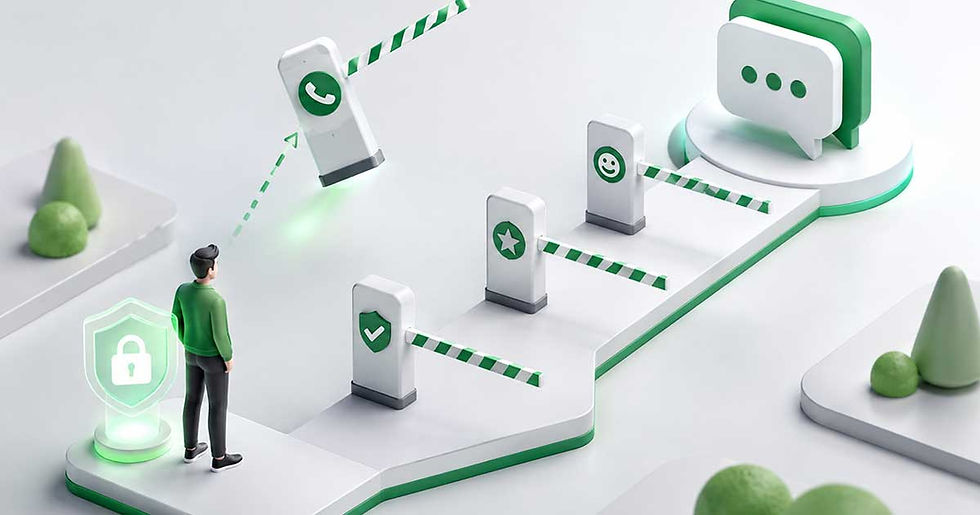
Because handles can be imitated, a patient needs to be certain they're talking to the genuine clinic and not a lookalike. In healthcare, an impersonator posing as a clinic could do real harm — extracting information, or misleading vulnerable patients. So the trust measures that matter for any business matter more here.
Practically, a clinic should claim a clear, official handle matching its established identity, and publish that official handle consistently through its verified channels — its website, its signage, its official communications — so patients can confirm they're contacting the real clinic. Patients should be gently taught to verify the handle and reminded that the genuine clinic will never ask them for passwords, one-time codes, or sensitive details in unexpected ways. In a setting where trust is everything, making the genuine handle recognisable is a real safety measure, not an optional nicety.
Practical, responsible steps for a clinic
Putting it together into what a clinic should actually do.
Claim an official clinic username that matches your established brand, and secure it before a lookalike does. Publish it consistently across your verified channels so patients can recognise and trust the genuine handle. Use it for routine, logistical, non-sensitive contact — reminders, general enquiries, directions — where the privacy of not exchanging numbers is a genuine benefit. Keep all sensitive patient health information off consumer WhatsApp, in properly secured and compliant systems. Enable account protections like two-step verification on the clinic's account. And make sure your use of any messaging channel follows the data-protection regulations that apply to you — usernames help with one dimension of privacy, but your broader compliance obligations remain fully in place.
That combination — a trusted official handle, used for the right things, with sensitive data kept in the right systems, under proper compliance — is how a clinic uses usernames genuinely safely.
The honest bottom line
WhatsApp usernames offer clinics a real, worthwhile improvement: more private, more professional first contact, with neither patients nor staff exposing personal numbers, and a recognisable official handle that helps patients reach the genuine clinic. Used for routine, logistical, non-sensitive communication, that's a genuine step toward safer, tidier patient contact.
But the improvement is at the identity and contact level only. Usernames do not make consumer WhatsApp a compliant home for sensitive health information, they don't remove a clinic's data-protection obligations, and treating them as if they do would trade a real privacy benefit for a dangerous false sense of security. So claim your handle, publish it, use it for the right things, keep sensitive data in the systems built to protect it, and stay compliant. Do that, and usernames make your patient communication genuinely safer — within the honest limits of what they actually are.
Frequently asked questions
How do WhatsApp usernames make clinic communication safer?
They let patients and clinics connect without exchanging phone numbers, so neither side exposes a personal number, and they let a clinic present a professional official handle rather than a staff member's personal mobile. This makes routine, logistical first contact more private and professional — a genuine benefit at the identity and contact level.
Do usernames make WhatsApp safe for sharing patient health information?
No, and this is the critical point. Usernames change who can see a phone number, but standard consumer WhatsApp is not inherently compliant with health-data regulations, and Meta does not offer data-processing agreements covering clinical use. Sensitive patient health information should be kept off consumer WhatsApp and in properly secured, compliant systems, regardless of usernames.
What should clinics use WhatsApp usernames for, then?
Routine, logistical, non-sensitive communication — appointment reminders, general enquiries, confirming attendance, directions — where the privacy of not exchanging numbers is a real benefit. Anything involving symptoms, results, diagnoses, images, or records belongs in secure, compliant clinical systems, not consumer messaging.
Why does impersonation matter more for clinics?
Because in healthcare an impersonator posing as a clinic could do real harm, misleading vulnerable patients or extracting information. Since handles can be imitated, clinics should claim a clear official username, publish it consistently through verified channels so patients can confirm the genuine one, and remind patients the clinic will never ask for passwords or codes unexpectedly.
Do usernames remove a clinic's data-protection obligations?
No. Usernames improve one dimension of privacy, but a clinic's broader compliance obligations under the data-protection regulations that apply to it remain fully in place. Clinics should follow proper legal and compliance guidance for their region and keep sensitive data in compliant systems, treating usernames as a helpful contact-level improvement, not a compliance solution.


Comments