.png)
What Customers Look for Before Replying to a WhatsApp Business Message
- ongpohlee99
- Aug 10
- 6 min read
Before a customer replies to a business message on WhatsApp, they run a quick, mostly-unconscious audit — a handful of split-second checks that decide whether your message earns a reply or a swipe-away. It happens in a second or two, and most of it never reaches conscious thought. But if you understand what those checks are, you can write messages that pass them — because every one of the signals a customer scans for is something you control. Let's step inside the customer's head at the moment your message arrives, and walk through the audit they're running.
The premise worth holding: the reply decision is the customer's, made fast, on signals you provide. Your job is to pass their audit, not to demand their reply.

The audit happens in seconds, and mostly below awareness
First, understand the nature of what you're up against.
A customer glancing at an incoming business message isn't deliberating carefully. They're making a rapid, almost instinctive judgement — reply, ignore, or in the worst case, block. It draws on surface signals more than careful reading, and it's over in a moment. This means you don't get a considered evaluation of your offer; you get a snap verdict on whether the message is worth engaging with at all.
So the checks below aren't a conscious checklist the customer works through. They're closer to instincts firing all at once. But naming them makes them visible — and once they're visible, you can design for them. Here's what's actually being scanned.
Check 1: "Do I recognise who this is?"
The first and fastest check: is this someone the customer knows and expects to hear from?
A message from a recognised sender the customer has a relationship with clears this instantly. A message from an unknown or unexpected sender raises immediate wariness — who is this, and why are they messaging me? On a personal channel, an unrecognised business message starts on the back foot, because the space is meant for known contacts.
What this means for you: recognition is earned before the message arrives. A customer who opted in knowingly, has heard from you before at a sensible cadence, and recognises your name passes this check easily. One who's forgotten who you are, or never really opted in, fails it — and everything after is harder. Being recognisable, through consistent and welcome prior contact, is what gets you past the very first gate.
Check 2: "Is this relevant to me?"
The second check, and one of the most decisive: does this message actually concern the customer?
In the first glance, the customer is assessing whether the message relates to them — their interests, their situation, something they care about. A message that's obviously relevant earns attention. A message that's generic, or clearly blasted to everyone, signals "this wasn't really for me" and gets dismissed. Relevance is the difference between "this is about me" and "this is just marketing."
What this means for you: relevance is the strongest single signal you control. A message that speaks to something specific to that customer — tied to what they bought, asked about, or need — passes this check powerfully. Generic broadcasts fail it. This is why segmentation and genuine relevance matter so much: they're what make a message feel addressed to a person rather than sprayed at a list.
Check 3: "Does this look legitimate, or dodgy?"
The third check is a safety scan, and it's increasingly sharp: does this message feel trustworthy or suspicious?
Customers are wary of scams, and rightly so. In that first glance they're subconsciously checking for red flags — does this seem legitimate, or does it feel off? Signals that trip the alarm include manufactured urgency, requests for sensitive information, suspicious links, too-good-to-be-true offers, and anything that pressures immediate action. Trip this alarm, and you don't just lose the reply — you may get reported or blocked.
What this means for you: legitimacy is signalled by not doing the things scams do. No false urgency, no requests for sensitive details, no pressure, no impossible promises. A calm, clear, professional message that asks for nothing suspicious reads as safe. In an environment where customers are actively scanning for threats, simply being obviously trustworthy is a competitive advantage — and the absence of scam-signals is a signal in itself.
Check 4: "How much effort would replying take?"
The fourth check is about friction: is engaging with this easy or a hassle?
People are busy and cognitively economical. In assessing whether to reply, they're gauging the effort involved — is this clear and easy to respond to, or does it require work to understand and act on? A message that makes the next step obvious and effortless invites a reply. One that's confusing, long-winded, or demands effort tends to get postponed into oblivion.
What this means for you: clarity and ease are conversion tools. A message that's easy to understand at a glance, with an obvious and simple way to respond, passes this check. One that buries its point or makes replying feel like a task fails it — not because the customer wasn't interested, but because the effort outweighed the impulse in a distracted moment. Make replying the path of least resistance.
Check 5: "Does the tone feel right for this space?"
The fifth check is about fit: does this message belong in a personal messaging app?
WhatsApp is an interpersonal space, and customers instinctively register whether a message fits it. A message that reads like a human being communicating — warm, clear, conversational — fits, and feels comfortable to reply to. One that reads like a formal corporate broadcast, or like aggressive hard-sell marketing, feels out of place, and creates the distance that discourages a reply.
What this means for you: tone is a fit signal. A conversational, respectful register that matches the channel invites engagement; a stiff or pushy one repels it. This isn't about being unprofessional — it's about sounding like a person worth replying to rather than an institution broadcasting at them. The right tone lowers the barrier to a human, natural response.
The checks combine into one verdict
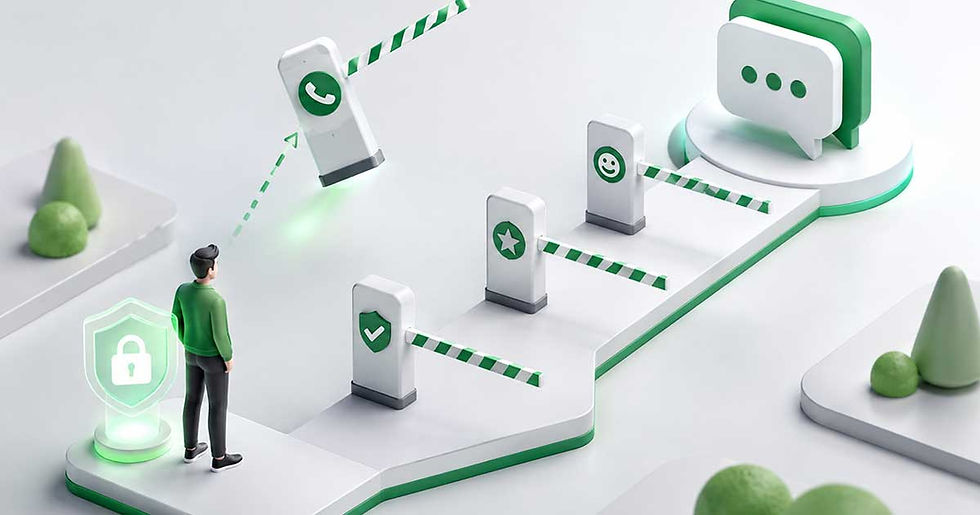
Step back, and these five checks aren't weighed separately — they fuse into a single, instant impression: is this worth my reply?
Recognition, relevance, legitimacy, low effort, and fitting tone all push toward yes. Their absence — an unknown sender, a generic blast, a whiff of scam, too much effort, a wrong-for-the-channel tone — pushes toward no, or worse. And because the judgement is fast and instinctive, a single strong negative signal can sink the whole thing: one scam red flag, or one clear sign the message wasn't really for this person, can override everything else.
Which reframes the task. You're not trying to write a persuasive message so much as one that passes an instinctive audit cleanly — clearing every gate so the customer's fast verdict lands on "yes, worth replying to."
What this means for how you actually message
The practical takeaway falls straight out of the audit.
Be recognisable — earn it through consistent, welcome prior contact, so you're never an unexpected stranger. Be relevant — make each message genuinely about the person receiving it, not blasted at everyone. Be obviously legitimate — no urgency, no pressure, no requests for sensitive details, nothing that trips the scam alarm. Be easy — clear at a glance, with an effortless next step. And fit the channel — a warm, human, conversational tone that belongs in a personal space.
Do those, and you pass the audit that every customer runs before replying. Fail any of them, and you've likely lost the reply before your message was even read properly — not because the offer was bad, but because the message didn't clear the instinctive checks that come first. The reply was always the customer's to give; your job is simply to make giving it the natural choice.
Frequently asked questions
What do customers check before replying to a WhatsApp business message?
They run a fast, mostly-unconscious audit of five things: whether they recognise the sender, whether the message is relevant to them, whether it looks legitimate rather than a scam, how much effort replying would take, and whether the tone fits a personal messaging space. These fuse into a single instant verdict on whether the message is worth a reply.
What's the most important signal for earning a reply?
Relevance is the strongest signal a business controls. A message that clearly relates to the specific customer — their situation, interests, or needs — reads as genuinely for them and earns attention, while a generic message blasted to everyone signals "not really for me" and gets dismissed.
Why do some business messages get ignored or blocked?
Because they fail one or more of the instinctive checks: an unrecognised sender, an irrelevant generic blast, scam red flags like urgency or requests for sensitive details, too much effort to engage, or a tone that doesn't fit a personal channel. A single strong negative signal, especially a scam flag, can sink a message regardless of its offer.
How can I make my messages easier to reply to?
Reduce friction: make the message clear at a glance and the next step obvious and effortless. People assess how much work replying takes, so a message that's easy to understand with a simple way to respond invites a reply, while a confusing or demanding one gets postponed indefinitely.
Does tone really affect whether customers reply?
Yes. WhatsApp is a personal space, and customers instinctively register whether a message fits it. A warm, clear, conversational tone reads like a person worth replying to and lowers the barrier to a natural response, while a stiff corporate or aggressive hard-sell tone feels out of place and discourages engagement.

Comments