.png)
Will WhatsApp Usernames Make Customers More Comfortable Messaging Businesses?
- ongpohlee99
- 3 days ago
- 6 min read
Short answer: plausibly yes, for one specific and real reason — usernames let a customer message a business without handing over their personal phone number, and that removes a genuine point of hesitation. But "more comfortable" isn't the whole story, because comfort messaging a business rests on several barriers, and usernames only lower one of them. Let's look honestly at what actually makes a customer hesitant to reach out, and assess — barrier by barrier — how much usernames really change.
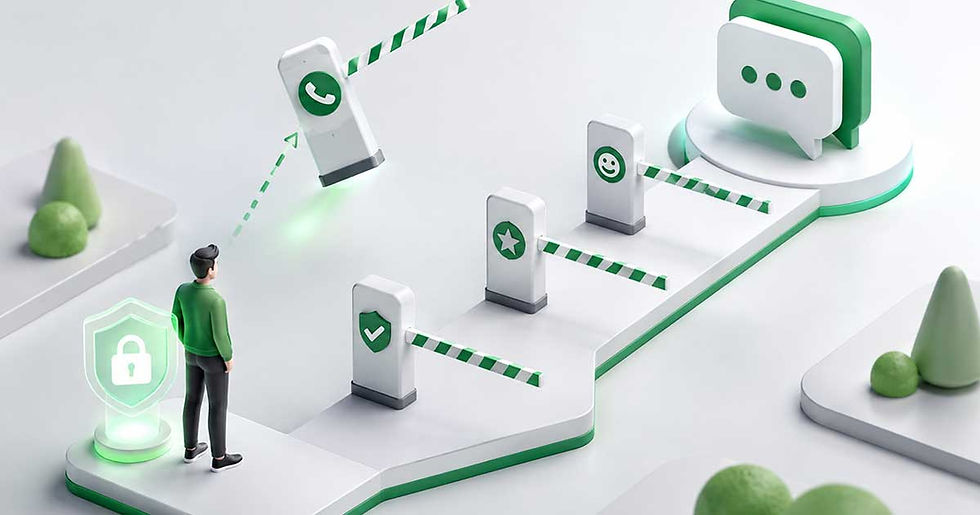
First, the honest core: usernames do remove a real barrier
Let's ground the genuine part before we complicate it.
The privacy benefit here flows in the customer's favour. As the rollout works, <cite index="1-1">users gain the ability to hide their number from businesses,</cite> and the feature exists because <cite index="2-1">Meta research showed that control over personal information is one of users' top concerns when using WhatsApp.</cite> The comfort implication is stated almost directly in industry coverage: <cite index="6-1">customers already want this — they feel more comfortable messaging a business when they don't have to hand over their mobile number upfront.</cite>
So there's a real, evidence-backed reason to answer "yes": handing your personal number to a business is a genuine hesitation, and usernames remove the need to do it. That's not marketing spin — it's a real barrier, genuinely lowered. The honest question is how much that one barrier was holding customers back, relative to the others. So let's walk through what actually stops a customer from comfortably messaging a business.
Barrier 1: "I don't want to give a business my personal number"
Effect of usernames: genuinely removed.
This is the barrier usernames were built for. Plenty of people hesitate to message a business precisely because it means surrendering their phone number — a number tied to their personal life, and one they can't easily take back. That reluctance is real, and it's exactly what pushed some users toward other apps.
With a username, the customer can initiate contact while keeping their number private. It's optional and it's their choice, but for the privacy-conscious customer, this removes a real reason to hold back. So on this specific barrier, usernames make a genuine, positive difference. For someone who only hesitated because of the number, this may well tip them from "I'd rather not" to "sure, I'll message."
Barrier 2: "I don't know if this business is trustworthy"
Effect of usernames: mostly unchanged — and slightly complicated.
Here's where honesty matters. A big part of whether a customer feels comfortable messaging a business is whether they trust it — and usernames don't automatically create that trust. A customer wary of a business's legitimacy is just as wary whether they contact it by number or by handle.
In fact, usernames add a small wrinkle here: because handles can be imitated, a customer has to be sure they're messaging the genuine business and not a lookalike. So on the trust barrier, usernames don't lower it — and if anything, they add a small new "is this the real handle?" consideration. Comfort that depends on trust still has to be earned the old-fashioned way: by being visibly legitimate and consistent.
Barrier 3: "I'm not sure it's worth the effort"
Effect of usernames: unchanged.
Another quiet barrier to initiating contact is simple friction and doubt: will messaging this business actually get me anywhere, or is it a hassle? Will I get a useful response, or be ignored?
Usernames do nothing for this. Whether a customer expects a helpful, prompt, worthwhile interaction is about the business's responsiveness and usefulness, not its identifier. A memorable handle doesn't make a customer expect a better conversation. So this barrier sits entirely outside what usernames touch — it's earned through actually being responsive and helpful.
Barrier 4: "I might get spammed if I make contact"
Effect of usernames: indirectly eased, a little.
Some customers hold back from messaging a business because they fear opening the floodgates — that reaching out once means endless promotional messages afterward.
Usernames touch this one indirectly. Because the privacy architecture gives customers more control over their contact details and how they're reachable, a privacy-conscious customer may feel a little more in control of the interaction, and therefore slightly more willing to start it. But the real fix for this fear isn't the username — it's the business demonstrably not spamming people. Control features help at the margin; restraint is what actually reassures.
Barrier 5: "It feels awkward or formal to message a business"
Effect of usernames: unchanged — this is about tone, not identity.
There's a social barrier too: messaging a business in a personal app can feel oddly formal or awkward, like it doesn't belong there. Whether a customer feels comfortable bridging that gap depends on how approachable the business feels.
Usernames don't change this. Approachability comes from a business's tone, presence, and how human it feels to interact with — not from having a handle. So this barrier, too, is untouched by the feature and entirely down to how the business presents itself.
Adding it up: a real but partial effect
Step back, and the honest picture is clear. Of the barriers that make a customer hesitant to message a business, usernames squarely remove one — the reluctance to share a personal phone number — and that's a genuine, evidence-backed win. They ease a second (spam fear) slightly and indirectly. And they leave the rest — trust, expected usefulness, approachability — essentially untouched, while adding a small new "is this the real handle?" consideration on the trust side.
So will usernames make customers more comfortable messaging businesses? For the specific, privacy-driven barrier, genuinely yes — and for privacy-conscious customers who were held back mainly by the number, that could be the difference that gets them to reach out. But "more comfortable" overall still depends heavily on the barriers usernames don't touch. The feature opens a door a little wider; it doesn't rebuild the house.
What this means for how you should think about it
The practical takeaway is a balanced one, and it keeps you honest with yourself.
Do welcome the privacy benefit as a genuine reduction in one real barrier — some customers really will feel freer to make first contact, and claiming a clean, recognisable handle helps them do so confidently. But don't imagine usernames alone will make hesitant customers comfortable. The bigger drivers of comfort — being visibly trustworthy, obviously worth messaging, non-spammy, and approachable — remain your job, exactly as before.
In other words: let usernames remove the barrier they're good at removing, and keep doing the real work on the barriers they can't. A customer made comfortable by privacy still won't message a business they don't trust or don't expect to be helpful. The username gets them to the threshold; everything you were already supposed to do is what gets them through it.
Frequently asked questions
Will WhatsApp usernames make customers more comfortable messaging businesses?
For one specific reason, plausibly yes: usernames let customers message a business without revealing their personal phone number, which removes a genuine point of hesitation, and industry reporting suggests customers feel more comfortable when they don't have to hand over their number upfront. But overall comfort also depends on trust, expected usefulness, and approachability, which usernames don't change.
How exactly do usernames reduce hesitation?
They let a privacy-conscious customer initiate contact while keeping their phone number private, since the privacy benefit flows to the user's advantage. For someone who was reluctant mainly because messaging meant surrendering a personal number tied to their life, that removes the specific reason they were holding back.
Do usernames make customers trust a business more?
Not automatically. Trust is earned through being visibly legitimate and consistent, and a customer wary of a business is wary regardless of the identifier. Usernames even add a small consideration, since handles can be imitated, so customers must ensure they're messaging the genuine business rather than a lookalike.
What barriers to messaging do usernames NOT solve?
Whether a customer trusts the business, whether they expect a helpful and worthwhile response, and whether the business feels approachable rather than awkwardly formal. These depend on the business's legitimacy, responsiveness, and tone — none of which a username changes. Usernames remove the phone-number barrier, not these.
So should businesses rely on usernames to win more contact?
No. Treat usernames as a genuine but partial help — they lower one real barrier and are worth supporting with a clean, recognisable handle. But the bigger drivers of customer comfort, being trustworthy, useful, non-spammy, and approachable, remain the business's responsibility exactly as before.


Comments